The Hidden Cost of Seeking Validation: Why You’re Never Satisfied
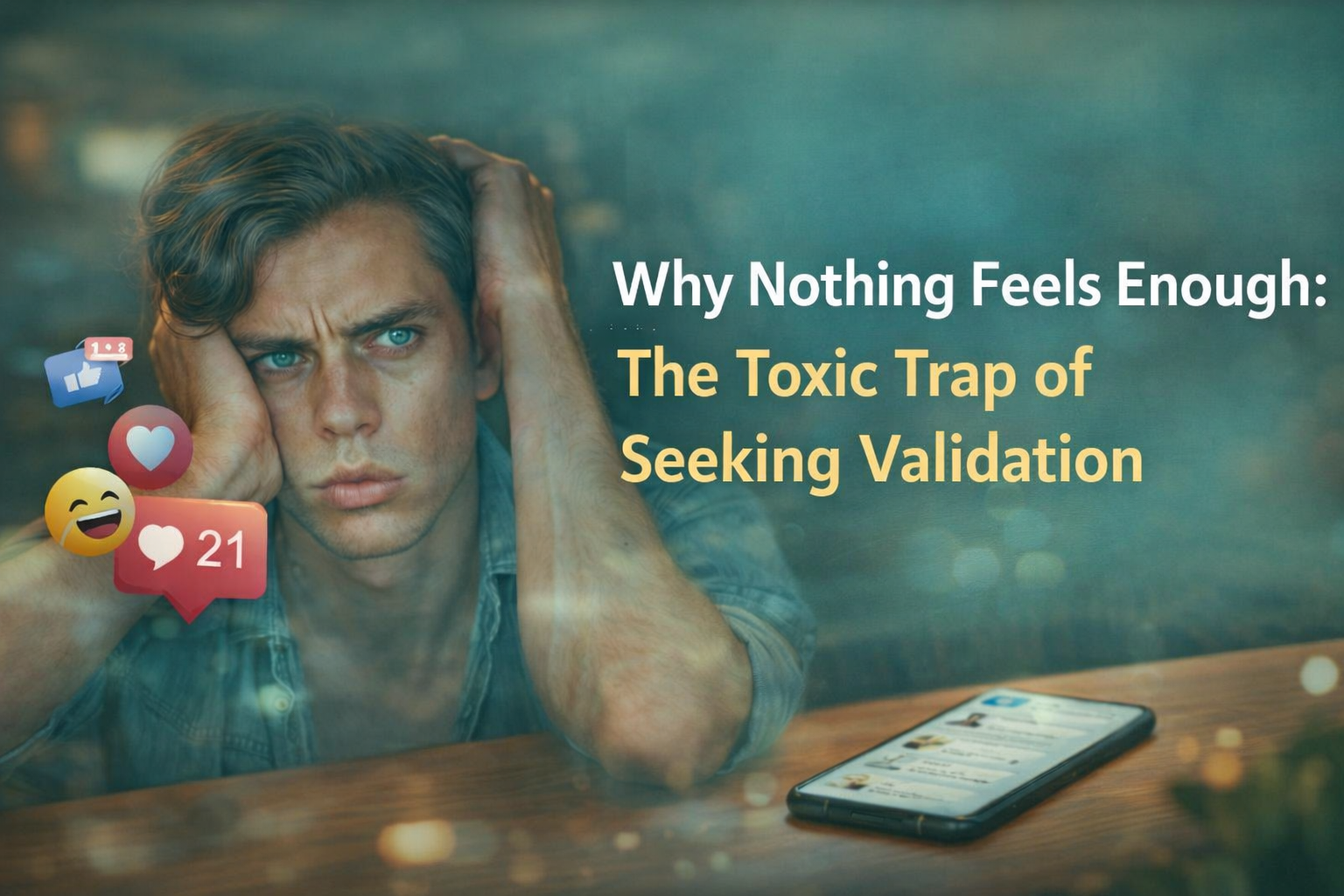
Validation is actually the feeling of being accepted, approved, or sometimes appreciated by others. In small amounts, it’s natural. But when it becomes something you depend on, it starts to shape your choices, your overall confidence, and even your sense of self.
You can just share your idea, post something, or even make a decision, and almost instantly, your mind shifts to that one question: What will others think? That question feels small, but over time, it begins to control more than you exactly realise.
The actual need for validation does not always look obvious. It can be shown in some habits, such as checking reactions before trusting yourself, feeling unsettled without approval, or changing your behaviour in order to avoid judgment.
In this blog, we’ll explore the psychology behind why people seek validation, the hidden cost it carries, the signs that you shouldn’t ignore, along with practical ways to stop seeking validation and build a stronger, more independent sense of confidence.
What is Validation?
Validation is such a sense that your thoughts, feelings, actions, or sometimes choices are acknowledged, accepted, and considered meaningful. It plays a basic role in human psychology; we all just want to feel seen, heard, and valued. In healthy amounts, validation builds confidence and strengthens relationships. However, when you start being dependent on it constantly, especially from others, it has the potential to slowly shift your sense of worth from internal to external sources.
There are 2 main types of validation, and it’s essential to understand the difference clearly:
- External validation comes from others
It involves praise, likes, comments, recognition, or approval. It totally feels good, but it’s temporary and mostly outside your control.
- Internal validation comes from within
This is when you acknowledge your own efforts, trust the decisions, and feel confident without even requiring constant approval from others.
The actual problem starts when external validation becomes your primary source of confidence.
Here’s how it shows up in everyday life:
- Social media
When you post something, you keep checking how people exactly respond. Your mood changes based on likes, comments, or sometimes views.
- Relationships
Here, you always look for constant reassurance. No matter if it’s through attention, compliments, or approval, to feel secure.
- Workplace
You solely depend on feedback, praise, or recognition in order to feel like you’re doing well, even when your work is solid.
Just keep in mind, external validation isn’t wrong. But when it comes to the one and only way that measures your worth, your confidence becomes completely unstable.
That’s exactly why it’s important to build internal validation. It gives you a steady feeling of self that doesn’t even rise and fall according to others’ opinions.
Why We Seek Validation?
The requirement for validation isn’t random or even weak. More than that, it is more entrenched in the psychology of people. Your brain is literally programmed to be accepted and rejected. This is because in the past, membership equated to survival. But in the modern generations, this instinctive inclination is generally exaggerated in various aspects that influence your self-belief and judgment. The reason it occurs is as follows:
- Need for acceptance: On a simple level, every person desires to belong and be appreciated. Our mind associates approval with belonging. It does not matter whether it is a social group, a workplace, or even a relationship. It can make you go to the extent of doing things that are accepted even at the expense of what you really would have preferred.
- Low self-worth: When you do not have complete kind of trust in yourself, you simply begin to look outside. Compliments, recognition, and approval are some of the ways that fill that gap, but on a very temporary basis. Then it is a vicious circle of finding validation to feel like you are good enough.
- Fear of rejection: The rejection is personal, although it is not. To avoid that uneasiness, you can think too much, screen your views, or occasionally alter your entire personality. The validity is a problem that needs to be solved at the expense of being safe and not judged or isolated.
- Social conditioning: Some are conditioned at a tender age to get the consent of parents or even teachers, or even society. Good grades, praise and reward teach you that it is by being acceptable that you do what other people expect. This tendency is carried to maturity.
The Hidden Cost of Seeking Validation
At first, looking for validation feels harmless. It gives you a feeling of assurance, an immediate boost of confidence. But over time, the cost turns deeper than most people actually realize. It doesn’t just affect your mood; it starts changing how you perceive yourself and how you live your life.
Loss of self-identity
When you constantly look for approval, you slowly stop asking yourself what you really want. Your choice starts to show what others might like, not what feels suitable to you. Over time, this results in confusion. You can look confident on the outside, but you’re no longer sure who you really are.
Emotional dependency
Your emotional stage becomes tied to others’ reactions. A compliment can lift you instantly, while silence or criticism can bring you down just as fast. Now, this creates a fragile mindset where your happiness is no longer stable; it relies totally on what others say or do.
Never feeling “enough”
Even when you achieve the validation you were looking for, it doesn’t last. This is because there’s always a need for more. More approval, more recognition, more reassurance. No matter what you get, it feels temporary, just like you have to prove yourself again and again.
Anxiety and constant comparison
You compare yourself with others, their success, their appearance, along with their opinions. And, it leads to overthinking, self-doubt, along with a constant feeling of being behind or not being good enough. The more you compare yourself, the more anxious and disconnected you will be.
Signs You’re Addicted to Validation
- Constantly checking phone
- Overthinking others’ opinions
- Changing behaviour to please others
How to Stop Seeking Validation?
Step 1: Step 1: Build self-awareness
Firstly, you need to be aware that you are seeking approval. Just stop, and then ask yourself, is it you acting on your own judgment, or are you trying to please other people? It is the initial step in interrupting the cycle.
Step 2: Minimising Outside Influences (social media detox)
Restrict it to the number of visits you make to likes, comments, or feedback. Due to the ongoing exposure, there is a greater demand of validation. The distance acts to stabilise your mind and make it less reactive.
Step 3: Establish Individual Standards.
Be aware of what matters to you. Once you do what you believe is a good thing according to your own values, you do not need so many people and begin to believe in yourself even more.
Step 4: Practice Self-Validation
During this stage, you must recognise what you have done yourself. You do not have to wait to be complimented; you should simply notice what you are doing and how you are making progress. This generates long-term and stable confidence.
Be aware of what matters to you. Once you do what you believe is a good thing according to your own values, you do not need so many people and begin to believe in yourself even more.
Step 5: Accept that Not Everyone Will Like You
Not all people will accept you, and that is all right. Once you digest this, it will set you free of the pressure to please everyone so as to assist you in being true to yourself.
Conclusion
Looking for validation can feel natural. But to become addicted to it is to make your self-confidence feeble and your identity. The actual change happens when you no longer base your value on how other people respond to you but rather on your own opinion.
You do not actually have to be constantly approved to feel adequate. Now, you have to begin deciding on what actually matters to you, and eventually, that slim assurance is much more trustworthy than any outside approval.
Prakhar ke Parvachan
Powerful Thoughts, Motivational Parvachan & Life Lessons
Quick links
- Home
- About
- Why Prakhar
- Blog
Categories
- Feature
- Categories
- Love, Emotions & Healing